Choosing among the top Casual Walking Shoes manufacturers in China requires more than comparing price lists. A polished sample may look convincing under showroom lights. Yet comfort becomes clear only after hours on pavement, tile, and stairs. Buyers should examine fit consistency, outsole grip, cushioning, upper materials, and quality-control records. Small details matter. A stiff heel counter or uneven stitching can change the whole experience.
Footwear biomechanics researcher Benno Nigg is often associated with a practical principle: “The best shoe is the one that feels best.” That idea is useful, though it is not a complete purchasing standard. A comfortable first try-on cannot confirm long-term durability or reliable production. Request samples in multiple sizes, inspect the seams and sole bonding, and ask how the manufacturer checks batches before shipment. Clear answers are a good sign.
This guide looks at Chinese manufacturers through those practical questions: product capability, customization, communication, and evidence of consistent quality. It also considers the difference between a factory’s catalog claims and what a buyer can verify. Not every supplier will suit every brand. Some details may still be hard to judge remotely. That is worth admitting. A careful shortlist, followed by hands-on testing, offers a more dependable path to selecting a manufacturing partner for Casual Walking Shoes.
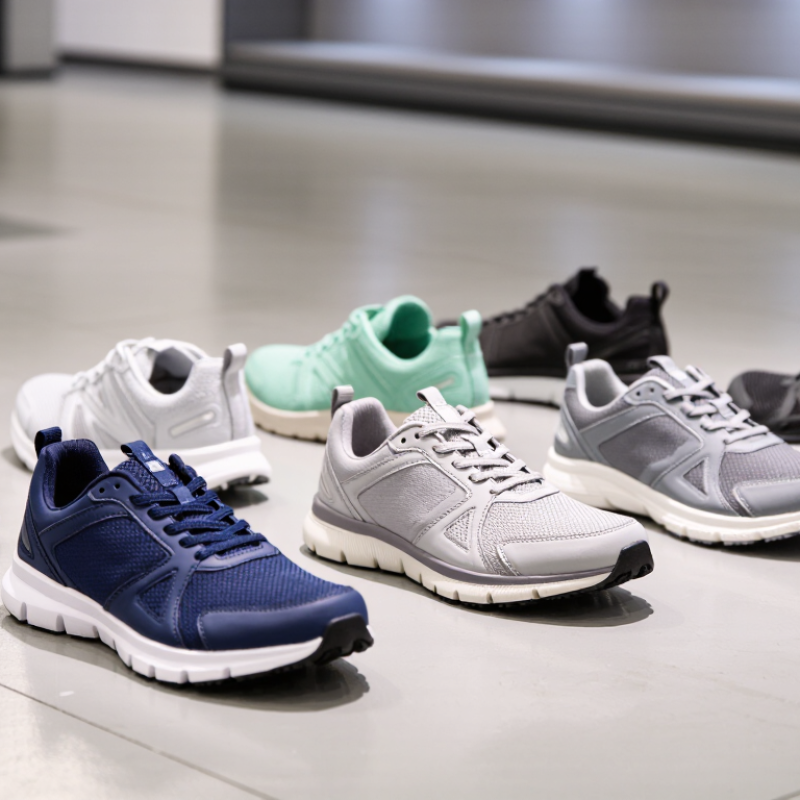
China’s casual walking shoe industry is a network, not a single factory floor. The World Footwear Yearbook 2023 estimated that China produced 54.6% of the world’s footwear in 2022. That scale supports a layered supply chain: material suppliers, component makers, pattern developers, assembly factories, and testing services often work within the same regional ecosystem. The figure covers all footwear, not casual walking shoes alone. That distinction matters.
Production clusters have different strengths. In parts of Fujian, suppliers commonly handle athletic-style soles and lightweight construction; Zhejiang and Guangdong have broader footwear and materials networks. A buyer may source mesh, foam, insoles, and packaging from separate firms, while one manufacturer coordinates cutting, stitching, lasting, and final inspection. On the factory floor, this can mean checking sole bonding and heel fit before cartons are sealed. Small details matter.
The structure is efficient, but not automatically consistent. Factories may share suppliers yet differ in fit standards, material control, and production records. A sample that feels comfortable can still reveal pressure points after several hours of walking. I would treat supplier location as a starting clue, not proof of quality. Ask for wear-test methods, defect tracking, and clear material specifications. Some factories document these well; others need closer follow-up.
| Industry Layer | Common Production Areas | Typical Role | Relevant Products or Inputs | What Buyers Commonly Evaluate |
|---|---|---|---|---|
| Materials and components | Fujian, Zhejiang, Guangdong and other footwear-production regions | Supplies factories with materials and parts used in shoe assembly | Soles, insoles, textiles, synthetic materials, leather, laces and fasteners | Material specifications, consistency between batches, traceability and compliance documents |
| Footwear manufacturing clusters | Jinjiang and other parts of Quanzhou, Fujian; Wenzhou, Zhejiang; parts of Guangdong | Concentrates factories, component suppliers and related services, supporting coordinated production | Casual, sport-inspired, walking and everyday footwear, depending on the factory | Actual product experience, production capacity, subcontracting arrangements and quality controls |
| OEM manufacturing | Available across major footwear-producing provinces | Makes footwear to a buyer’s specifications, designs or approved samples | Private-label walking shoes and other buyer-defined styles | Sample accuracy, material sourcing, order terms, inspection procedures and delivery planning |
| ODM and product development | Often located near established manufacturing and component-supply networks | Develops or adapts designs, patterns and construction for buyers | Upper patterns, sole combinations, fit options and seasonal product variations | Design ownership, development timeline, tooling costs and approval process |
| Assembly and finishing | Factory locations vary by product, process and sourcing arrangement | Combines uppers, soles and components, then completes finishing and packing | Cutting, stitching, lasting, sole attachment, trimming and packaging | Workmanship standards, production-line controls, defect handling and final inspection |
| Testing and compliance | Testing may be arranged through in-house facilities or independent laboratories | Checks product performance and market-specific requirements | Fit, bonding, flexing, abrasion, restricted substances and labeling, as applicable | Test methods, applicable destination-market rules, report validity and corrective actions |
| Export and logistics | Coastal manufacturing and port regions, including Fujian, Zhejiang and Guangdong | Coordinates export documents, packing and transport, directly or through trading and logistics partners | Carton packing, shipping documents, freight bookings and order coordination | Export experience, Incoterms, shipment schedules, packaging requirements and communication clarity |
Note: These are general industry patterns, not a ranking of individual factories. Capabilities, minimum order quantities and lead times vary by product and supplier.