Shose expert

15 Years Manufacturing Experience
DSC00533

7 Tips for Buying Running Shoes for Men

Choosing Running Shoes Men is not just a matter of picking a popular brand or the newest model. A shoe that looks fast on a shelf may feel cramped after three miles. The right choice depends on your foot shape, running surface, weekly distance, and personal comfort. The Sports & Fitness Industry Association’s 2023 Topline Participation Report counted 50.7 million U.S. participants in running and jogging in 2022. That scale makes good footwear guidance useful, but no single shoe suits every runner.

Running-shoe biomechanics expert Dr. Benno Nigg is often quoted as saying, “The best shoe is the one that feels most comfortable.” Comfort matters, but it is not the whole test. Check that your toes can spread, your heel feels secure, and the shoe does not rub when you walk or jog. Try both shoes on, ideally later in the day, when feet may be slightly larger. Small details count. A narrow toe box can turn a short test into a long-run nuisance.

The seven tips ahead cover fit, cushioning, stability, terrain, and when to replace worn shoes. They are practical starting points, not a promise against discomfort or injury. Your old favorite may still be wrong for your current needs. That is worth reconsidering.
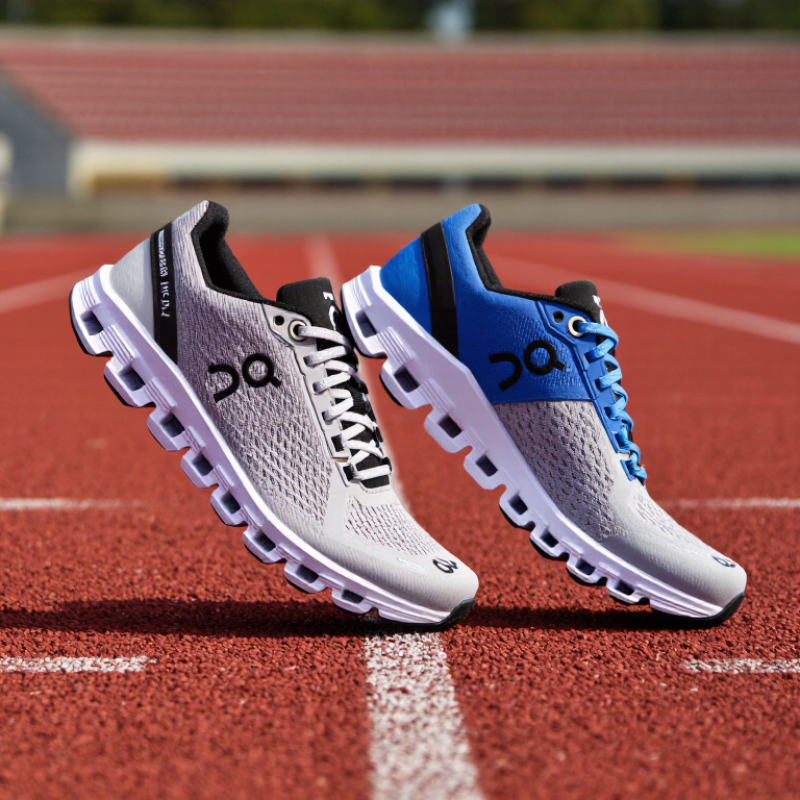
7 Tips for Buying Running Shoes for Men

Define Your Running Goals, Mileage, and Typical Terrain

Before buying running shoes, define what your runs usually involve. Are you building an easy weekly habit, training for a race, or adding short speed sessions? Your goal affects what feels comfortable: long, steady runs may call for a different feel than brief workouts. Be specific. “I run sometimes” is not much to go on.

Tip: Estimate your weekly mileage and note how often you run. A few short outings place different demands on shoes than frequent, longer sessions. Also consider your typical terrain. Pavement is firm and predictable; packed dirt may be uneven, while rocky trails call for more underfoot protection and grip. If your routes vary, choose based on where you spend most of your time. A shoe designed for every surface can be a compromise.

Think about recent patterns, not an ideal training plan. Jot down your usual distance, longest run, and favorite routes for two weeks. That detail matters. Mileage alone cannot determine when shoes need replacing, since fit, construction, and wear differ. Still, inspect the outsole and notice whether cushioning feels uneven or the upper rubs. I’d be cautious about chasing a shoe for a goal you rarely pursue; plans change, and comfort on your real routes counts.

Assess Your Foot Shape, Arch Type, and Gait

Before comparing cushioning or weight, look at the shape of your feet. Measure both while standing, since they may differ slightly under your body weight. Check whether your forefoot is broad, your toes spread naturally, or your heel feels narrow in most shoes. A roomy toe box should let your toes move without rubbing. Leave roughly a thumb’s width in front of your longest toe, then walk and jog briefly to check for pressure. Small details matter.

Your arch can offer clues, but it does not dictate one “correct” shoe. Low, medium, and high arches all vary, and a footprint test alone cannot diagnose your needs. Notice where your current shoes wear down, but treat that pattern as a clue, not a verdict. Watch your stride from behind on a short, easy run, or ask a qualified running specialist to assess it. Mild inward motion is common; discomfort and repeated injuries deserve more attention. I still find gait footage easy to overthink. Focus on comfort, stability, and how the shoe feels at your usual pace. Try it with your running socks, later in the day if possible, when feet may be slightly larger. The fit should feel secure, not tight.

Choose the Right Shoe Type, Fit, and Cushioning

Tip 1 — Match the shoe type to your usual runs. Road shoes suit paved paths, while trail shoes offer grippier soles for dirt and loose stones. If you split your time between surfaces, think about where you run most. One shoe cannot excel everywhere. A lighter feel may help on faster runs; a stable, protective design can feel better over longer distances.

Tip 2 — Check fit late in the day, when feet may be slightly larger. Leave about a thumb’s width in front of your longest toe, and make sure the midfoot feels secure without pressure. Walk, jog, and turn in the shoes. No pinching. Your heel should stay put, but a little movement is not always a problem. Sock thickness can change the fit, so try the pair with your usual running socks.

Tip 3 — Choose cushioning by comfort and running conditions, not by softness alone. A plush shoe may feel pleasant in the shop, yet too soft for your stride. Firmer cushioning can feel more controlled, though not everyone prefers it. Test both if possible. Notice pressure under your forefoot and heel after a few minutes. There is no perfect formula, and the first pair you try may not be the right one.

Test Shoes for Comfort, Support, and Flexibility

Comfort is a practical test, not a sales adjective. A 2019 Cochrane review examined 12 trials involving 11,240 runners. It found low- to very-low-certainty evidence on whether particular running shoes prevent injuries. That is a useful reality check: choose for fit and function, not promises. A shoe can feel supportive without forcing your foot into a rigid position.

Try shoes later in the day, when feet may be slightly larger. Wear your usual running socks, then check for roughly a thumb’s width of space in front of your longest toe. Walk and jog. Notice heel slip, rubbing, or pressure across the forefoot. Support is personal. If the arch feels intrusive in the shop, it probably will not become invisible on a long run.

Flexibility deserves a hands-on test. Bend the shoe gently at the forefoot; it should flex where your toes bend, while the heel stays secure. Then compare both shoes, since feet are not always identical. A soft, flexible shoe is not automatically better, and a firm one is not automatically safer. Shop-floor comfort can mislead, too, so use a return period to test the fit on an easy run.

7 Tips for Buying Running Shoes for Men: Test Comfort, Support, and Flexibility

Use these seven checks when trying on running shoes. The scores are illustrative ratings on a 1–5 scale, not laboratory measurements; assess each shoe for yourself, ideally late in the day and with your usual running socks.

Compare Durability, Price, and Replacement Needs

When comparing running shoes, look beyond the price tag. A low-cost pair may seem sensible, but worn cushioning or a loose outsole can make it a poor value. Check the stitching, heel structure, and rubber under the forefoot. Flex the shoe gently; it should bend near the toes, not collapse through the middle. Small details matter.

Track how many miles you run in each pair, and inspect them every few weeks. Uneven tread, a flattened midsole, or new aches can signal that replacement is due. There is no universal mileage limit: body weight, running surface, gait, and weekly distance all affect wear. Keep notes. They help. Compare cost per mile, not just the checkout total. For example, a $120 pair lasting 500 miles costs about 24 cents per mile; a $75 pair lasting 250 miles costs 30 cents. That estimate is imperfect, since comfort and fit are hard to price. A shoe that feels supportive in the shop may rub after several longer runs, so leave room in your budget for a return window or a gradual test. Some runners replace shoes too early because the upper still looks worn, or too late because the tread appears fine. I’d question both habits.

7 Tips for Buying Running Shoes for Men - Compare Durability, Price, and Replacement Needs
Tip What to Compare Durability Clues Typical U.S. Price Range Replacement Needs
1. Choose the right fit Check toe-room, width, heel hold, and comfort while standing and jogging. Feet may swell during a run, so try shoes later in the day if possible. A secure fit helps limit excess movement that can wear the lining and cause friction. Fit is available across budget levels; compare the exact shoe, not just the price. Replace sooner if the upper tears, the heel loses its hold, or the shoe no longer fits comfortably.
2. Match the shoe to your running surface Compare road shoes for paved routes with trail shoes that have more protective uppers and grippier outsoles. The outsole should suit the surface: frequent pavement use can wear down softer tread, while trail use can expose uppers to abrasion. Road and trail models commonly range from about $60 to $180 or more. Check tread and grip regularly, especially if you run on rough or slippery routes.
3. Compare cushioning and support Consider comfort, stability, and how the shoe feels at your usual pace. No single cushioning level is best for every runner. Foam can gradually compress with use; compare how the midsole feels after several runs rather than judging only by appearance. Cushioning options are found at many prices; extra features do not guarantee longer life. Consider replacement if cushioning feels noticeably flattened or your usual runs become persistently uncomfortable.
4. Inspect construction and materials Look over outsole coverage, stitching, bonded areas, and upper material. A reinforced high-wear area can be useful for your running pattern. Even wear, secure seams, and a firmly attached outsole are practical signs to check; they are not a guarantee of lifespan. Many everyday running shoes fall around $70–$150, with prices varying by design and retailer. Replace when damage affects fit, stability, or protection, even if the shoe has not reached a target mileage.
5. Compare price with expected use Compare the purchase price with your weekly mileage, intended use, return policy, and whether you need one pair or separate pairs for different activities. A higher price does not automatically mean greater durability. Check construction and reviews for recurring wear issues. As a broad guide, entry-level options may be about $50–$90, standard models about $90–$150, and some premium models $150 or more. Estimate cost per mile using your own replacement mileage and actual purchase price.
6. Track mileage and wear Record the date you start using the shoes and approximate running miles. Include running use rather than casual wear when tracking mileage. Many running shoes are commonly replaced after roughly 300–500 miles, but actual life varies with runner, terrain, shoe, and care. Use the shoe's actual purchase price for a meaningful cost-per-mile comparison. Treat mileage as a checkpoint, not a fixed rule; inspect the outsole, midsole, and upper as you approach that range.
7. Rotate and care for your shoes If you run frequently, consider alternating pairs and letting damp shoes air-dry away from direct heat. Drying between runs can help manage moisture and odor; avoid assuming rotation will prevent normal foam and outsole wear. A second pair adds upfront cost, so compare that cost with your running frequency and comfort needs. Replace each pair based on its own mileage and condition, not the age of the newest pair.

Price ranges are broad U.S. retail estimates and may vary by retailer, season, and location. Shoe lifespan is individual; use mileage as a guide alongside visible wear and comfort.